
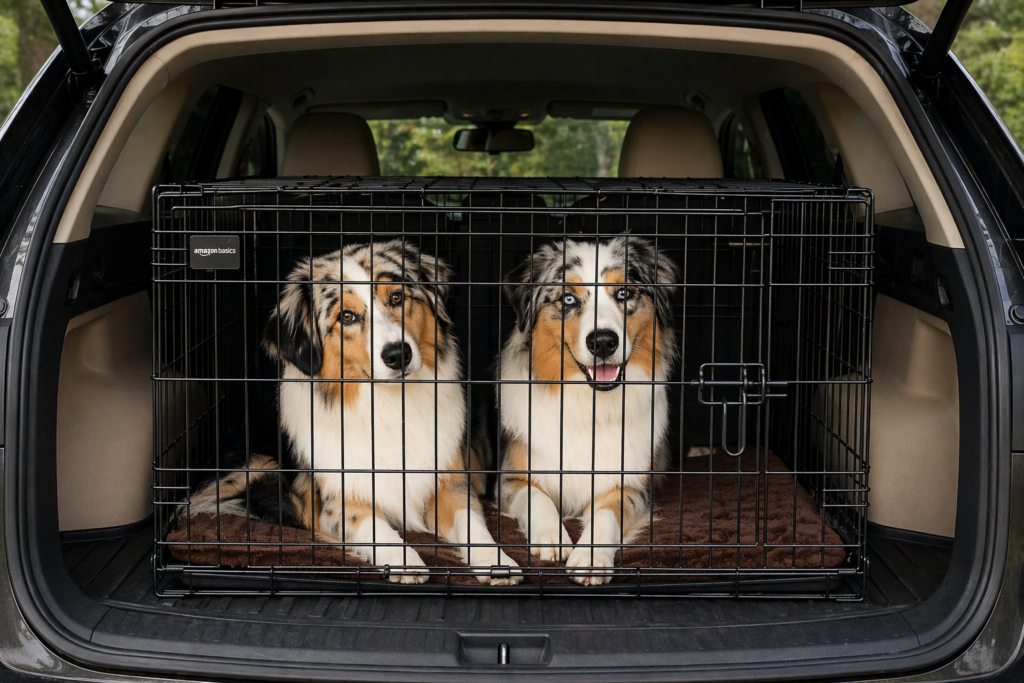
Crate training helps dogs feel safe, supports house training, and prevents destructive behavior when done correctly. The most effective way to crate train a dog is through positive reinforcement—rewarding calm, voluntary crate use. The crate becomes a place of comfort rather than confinement.
A crate works because it taps into something instinctive. It mimics a den. In the wild, dogs seek out small, enclosed spaces where they can rest, feel protected, and fully relax. When introduced the right way, a crate becomes that same kind of safe, happy place in your home.
I keep crates throughout my house with the doors open, so Seven and Paige Turner can wander in and out whenever they want. They’re not sent there. They choose to be there.
Seven didn’t need much convincing about a crate. If there’s even a hint of a snack, he’s in. Paige Turner took a little longer. She wanted to understand the assignment first. She always does. But once she saw how much Seven loved the crate, she decided it might be worth a try—and then it became hers too.
That’s the thing about crate training. Every dog comes to it differently. But the goal is always the same: the crate becomes a place they feel safe, not stuck.
Why Crate Training Works
Dogs are naturally drawn to den-like spaces. A crate can provide that sense of security, especially for dogs who are sensitive to their environment.
For dogs like mine, who are always tuned in, that sense of having a place to settle matters more than people realize.
Crate training can:
- Support house training
- Prevent unwanted chewing or behavior
- Create a calm reset space
- Make travel easier, safer, and more predictable
But none of that works if the crate feels like a punishment. It has to feel like their special place.
How to Crate Train a Dog (Step by Step)
- Start with curiosity, not control
Leave the crate door open so your dog can explore it on their own. Toss a treat inside and let them discover it.
Seven walks right in. Paige circles first, takes it all in, then steps inside as if she’s made a decision.
Let your dog have that moment. - Build a positive association
Every time your dog goes into the crate, something good should follow. A treat, a favorite toy, or calm praise.
You’re creating a simple connection:
crate equals good things. - Feed meals in the crate
Start feeding near the crate, then just inside, then fully inside.
This quickly turns the crate into part of your dog’s routine instead of something separate or uncertain. - Close the door briefly
Once your dog is comfortable, close the door for a minute or two while they’re eating or settling.
Stay nearby. Keep everything calm. Then open the door before they feel any stress. - Increase time gradually
Build duration slowly. A few minutes becomes ten, then longer.
You’re not testing your dog’s limits. You’re building comfort. - Never use the crate as punishment
This is the most important rule.
The crate should never be associated with stress or correction. It’s a place your dog chooses, not a place they’re sent. When it’s introduced this way, it becomes less of a training tool and more of a natural place to rest.
A Crate That Works Well at Home and in the Car
I’ve tried a few setups over the years, and this is one I keep coming back to, especially for SUV use:
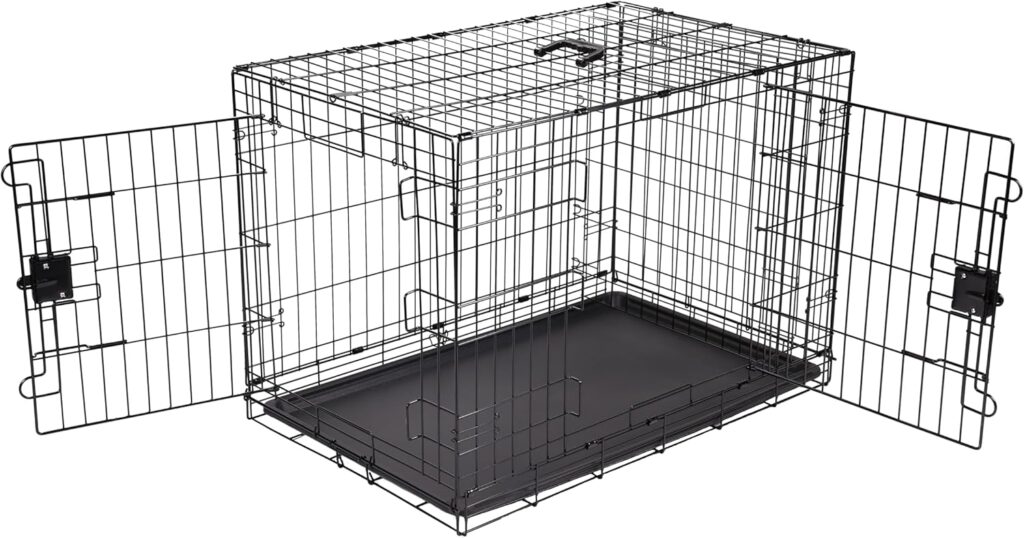
Amazon Basics Foldable Metal Wire Dog Crate (Double Door)
What I like about it:
- Two doors give you flexibility depending on your space
- It folds down easily for transport or storage
- The front-opening door fits perfectly in the back of my SUV
- It’s simple, practical, and easy to clean
- Fits both my dogs
For dogs like Seven and Paige Turner, who move between home, the car, and new environments, having a crate that feels familiar wherever they go helps them settle more easily.
The Real Goal of Crate Training
At some point, something shifts. Your dog walks into the crate on their own. Turns around. Lies down.
No cue. No treat. No reason other than it feels right.
That’s when you know the crate has become what it’s meant to be. A quiet, den-like space they trust.
Affiliate Disclaimer: As an Amazon Associate, I may earn a small commission from qualifying purchases at no additional cost to you.