
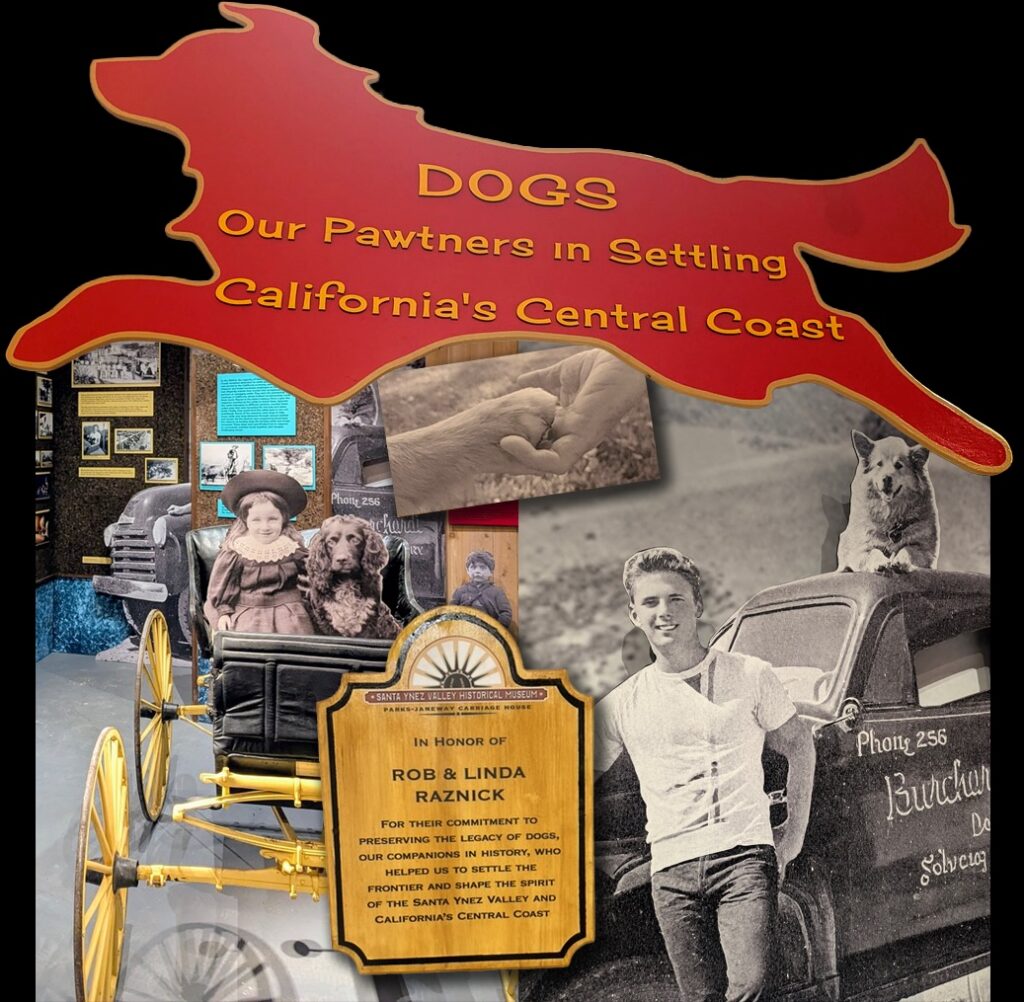
A Photographic Exhibit Celebrating our Faithful Companions, Past and Present
When we think about America’s western expansion, we often imagine wagons, settlers, cowboys, ranchers, and dreamers — but one essential participant is too often left out: the dog. They weren’t (and aren’t) just companions; they were workers, helpers, protectors, and emotional anchors through some of the toughest stretches of frontier life.
Now, at long last, dogs are getting their due.
“Dogs: Our Pawtners in Settling California’s Central Coast”
A new exhibit has opened in the Carriage House at the Santa Ynez Valley Historical Museum, celebrating exactly that: the roles dogs played in homesteading and early settlement on the Central Coast.
The exhibit, titled “Dogs: Our Pawtners in Settling California’s Central Coast,” highlights how dogs were essential to daily life, including guarding farmsteads, herding livestock, hunting for food, and providing irreplaceable companionship in challenging conditions.
Why This Exhibit Is So Endearing
One of the exhibit’s most popular elements is a historic photograph of Harlan Burchardi and his dog, Kit — with Kit perched on the roof of the pickup truck Burchardi used to deliver milk throughout the Santa Ynez Valley. The image has inspired visitors to pose for selfies and celebrate the dog’s enduring charm.
Museum staff tip: pose for a selfie in front of the iconic dog imagery and share it on your social pages!
A Community Celebration of Dogs
In a lovely interactive twist, the museum invites visitors to bring a photo of their own dog to pin to one of two corkboard panels in the exhibit. This creates a living, communal display that links modern pets with dogs from the region’s past — a bridge between then and now that’s part history, part heartfelt tribute.
That’s not just museum engagement. That’s community building, and dog lovers know how powerful that connection can be.
What This Means to Me (and Maybe You, Too)
When I think about dogs in history, I don’t just think about their usefulness. I think about their presence, loyalty, and intuition, and how they helped people endure long days and uncertain nights. Exhibits like this remind us that dogs haven’t just been along for the ride, they’ve been essential partners in the story of life, land, work, and belonging.
And it’s about more than nostalgia. It’s about recognizing that dogs have been, and continue to be, part of how communities form, thrive, and remember.
Our Annual 4th of July Trip to the Central Coast
I’m heading to the Central Coast this Fourth of July with Seven and Paige Turner to escape the fireworks frenzy in our neighborhood. We plan to visit the exhibit and add photos to the community display. It feels especially fitting to include our dogs in this regional story because the exhibit reflects what dog lovers have always understood: that dogs aren’t just part of our lives, they’re part of our history, too.
Why This Matters Now
In a world that often feels fast, fractured, and divided, it’s deeply grounding to reflect on the simple, steadfast role dogs have played in our lives — from the earliest days of settlement to our modern routines. Whether guiding livestock, visiting people as a therapy dog team, or simply spreading unconditional love, dogs have helped shape how we live, love, and endure.
So the next time you walk your dog, take a moment to reflect on all the ways dogs have walked beside humanity, throughout history and into our hearts.