
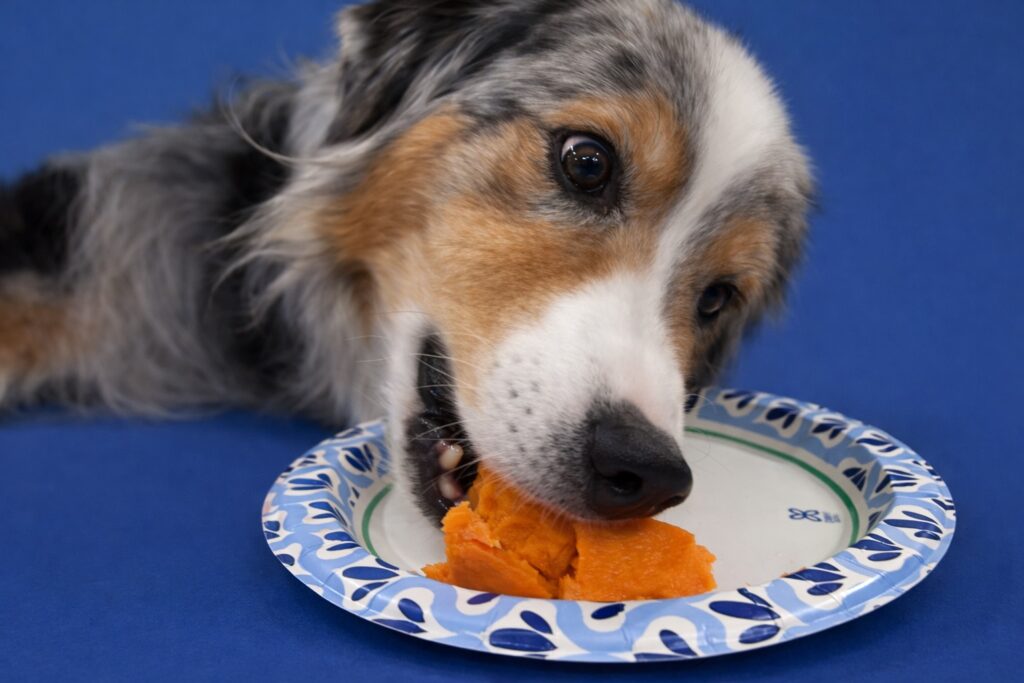
Can Dogs Eat Yams?
Although yams and sweet potatoes come from two different plants, the answer to “Can dogs eat them?” is “Yes”. According to veterinarians cited in an article on PetMD.com, when fully cooked and served plain, yams (often labeled as sweet potatoes in the U.S.) are safe for most dogs.
They provide:
- Soluble and insoluble fiber
- Beta-carotene (Vitamin A precursor)
- Vitamin C
- Vitamin B6
- Potassium
- Antioxidants
The key is preparation and portion control — which, honestly, is usually the key to everything.
My handsome boy, Seven, has always had a sensitive stomach. If you live with a dog like that, you know how much time goes into monitoring stool quality and adjusting food ingredients.
In Seven’s case, one surprisingly simple addition helped stabilize his digestion: plain, cooked yams. Not fancy. Not flavored. Just thoroughly cooked and served in small amounts.
And, yes, there’s science behind why it works. I’ve done a lot of research study and basic information grabbing on the subject. Here is what I’ve found:
Why Yams Help Dogs with Sensitive Stomachs
1. Fiber Regulation
Sweet potatoes contain both soluble and insoluble fiber. Soluble fiber absorbs water, helping firm loose stools. Insoluble fiber adds bulk and supports regular bowel movements.
Veterinary nutrition research supports moderate fiber intake to improve stool consistency in dogs with mild digestive irregularity.
For Seven, small daily portions of yams make a noticeable difference.
2. Prebiotic Support for Gut Health
Certain fibers in sweet potatoes serve as prebiotics, supporting beneficial gut bacteria. A balanced microbiome can:
- Improve digestion
- Reduce inflammation
- Stabilize stool consistency
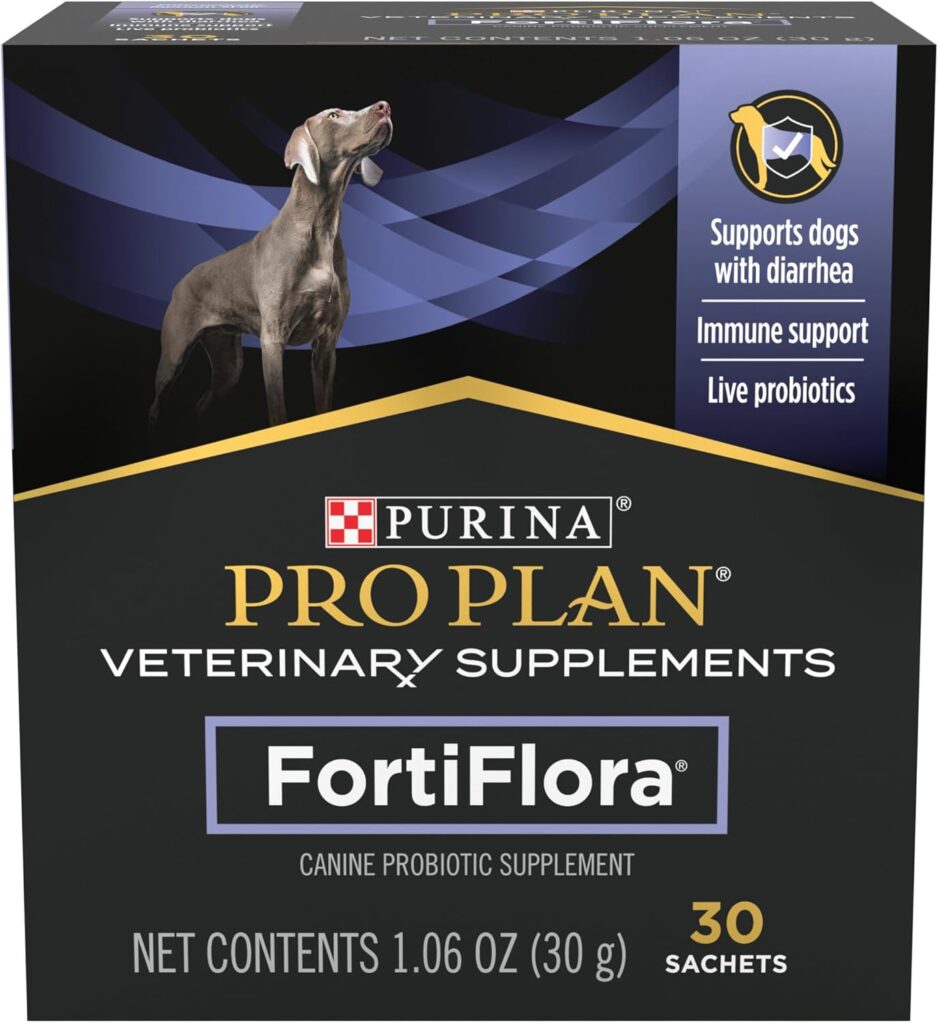
Some owners combine whole foods such as yams with a canine probiotic powder for additional digestive support. (Note: Always consult your veterinarian first.)
3. Gentle, Low-Fat Carbohydrate Source
Yams are:
- Naturally low in fat
- Easily digestible
- Less processed than many commercial fillers
That’s why they’re often found in limited-ingredient dog foods and veterinary GI formulas.
How to Prepare Yams for Dogs
You can safely prepare yams by:
- Steaming
- Baking
- Boiling
- Microwaving
Microwaving is the method I use most often because of its convenience and speed. Seven is always hungry, and he loves his yams.
- Wash the yams thoroughly.
- Poke several holes with a fork.
- Microwave until soft.
- Let cool completely.
- Remove skin (especially for sensitive dogs).
- Mash or cut into small pieces.
If you microwave them regularly, a microwave-safe glass container with a vented lid makes prep cleaner and easier.
Always serve plain. No:
- Butter
- Oil
- Salt
- Cinnamon
- Sugar
Never feed:
- Raw sweet potato skin
- Fried sweet potato skins
- Seasoned or salted skins
Portion Guide by Weight
For a medium-sized dog like Seven (about 40–60 pounds), start with about 1 tablespoon of fully cooked, mashed yams. You can mix it into his regular meal, mash it and serve it on its own (which is how Seven prefers it), or cut it into cubes for occasional treats.
I usually mash it and serve it on a small plate alongside his food.
Suggested Portions:
- Small dogs (under 20 lbs): 1–2 teaspoons
- Medium dogs (20–60 lbs): 1 tablespoon
- Large dogs (60–90 lbs): 1–2 tablespoons
- Giant breeds (90+ lbs): up to 2 tablespoons
Introduce yams gradually and monitor stool consistency for several days before increasing the amount. For consistent portioning, especially with dogs that have sensitive digestion, I use stainless steel measuring spoons.
A sudden increase in dietary fiber can alter colonic motility and fermentation, which may temporarily cause gas or loose stools. Gradual adjustments allow the digestive microbiome to adapt more comfortably.
Can Dogs Eat Yam or Sweet Potato Skin?
Yes, dogs can eat yam or sweet potato skin — as long as it is fully cooked and served plain.
The skin contains additional fiber and antioxidants, but it is more fibrous than the inner flesh and can be harder to digest.
For dogs with sensitive stomachs, like Seven, the skin may sometimes cause:
- Gas
- Mild digestive upset
- Softer stool
This is due to the higher insoluble fiber content, which increases intestinal motility. That can support regularity in some dogs but may be too stimulating for others.
For Seven, I usually remove most of the skin after cooking to keep things gentle.
Yam-Based Dog Treats: Easy, Single-Ingredient Options
There are also some excellent single-ingredient sweet potato dog treats on the market today.
Look for treats that are:
- Made from 100% sweet potato
- Limited ingredient
- Grain free
- Free of added sugar, salt, dyes, or preservatives
Here are a couple of my favorites (Seven recommends them too):
1. Healthfuls Sweet Potato Slices
Limited ingredient, grain-free, made from real dried sweet potatoes.
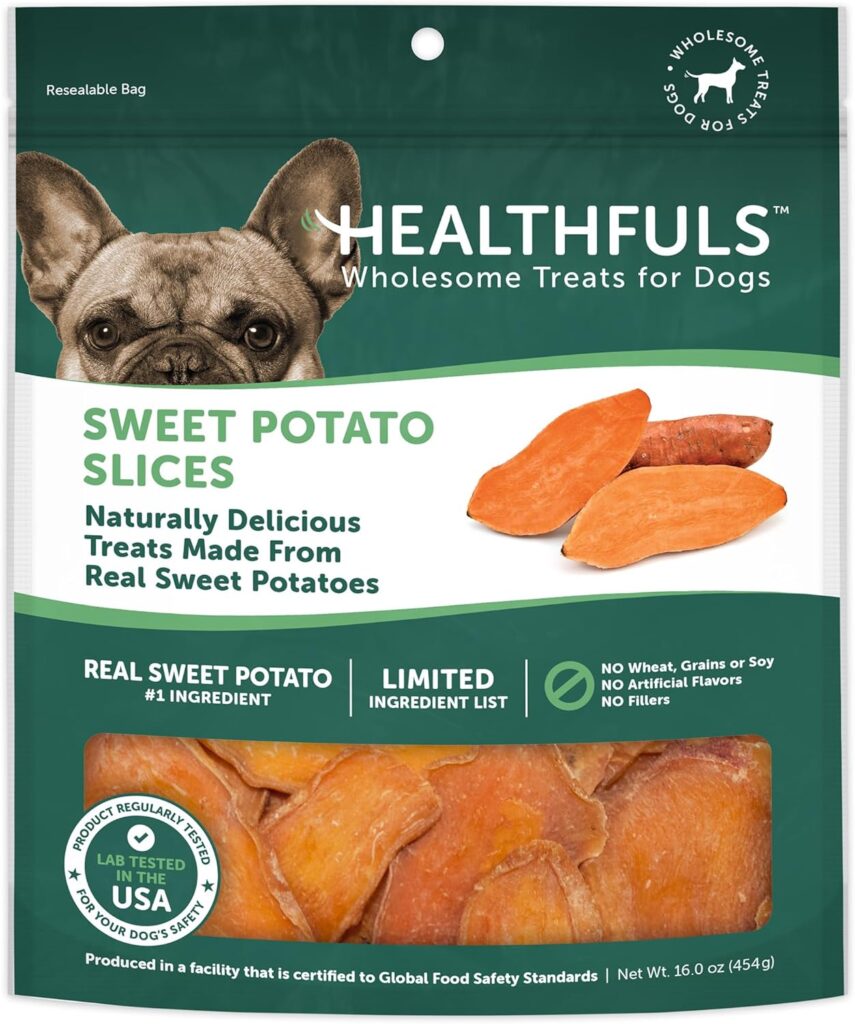
These retain much of the natural fiber that makes yams beneficial. For Seven, I break larger slices into smaller pieces to keep portions moderate.
2. Wholesome Pride Sweet Potato Chews
Single ingredient, all-natural dehydrated sweet potato treats.
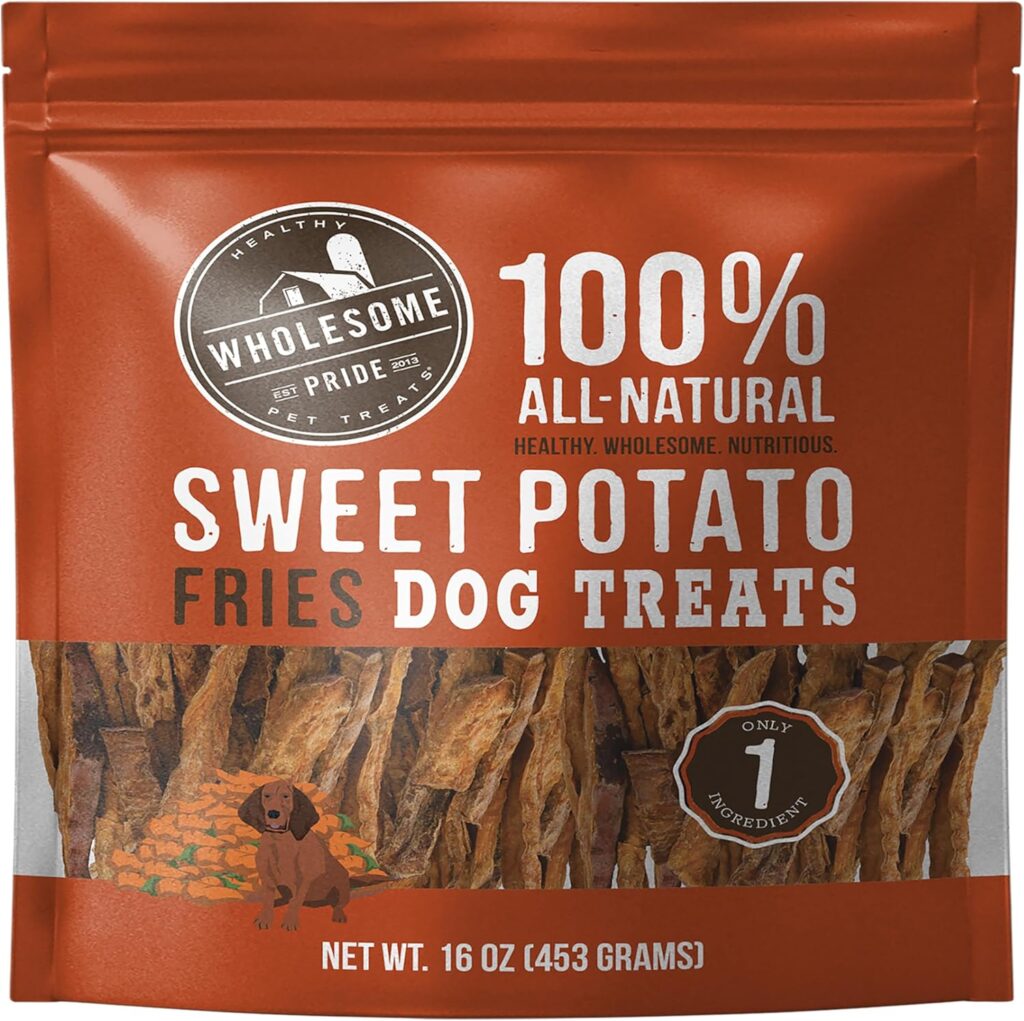
These tend to be slightly softer than thicker slices, which can be helpful for senior dogs or dogs with sensitive teeth.
As with all dehydrated treats, supervise chewing and introduce gradually.
Make Your Own: Homemade Sweet Potato Dog Treats
If your dog loves yams as much as Seven does, making your own treats can be simple and cost-effective.
A basic food dehydrator lets you slice sweet potatoes thinly and dry them at a low temperature, preserving nutrients without additives.
Homemade treats give you full control over thickness, texture, and freshness.
Simply:
- Slice sweet potatoes thinly
- Place in dehydrator
- Dry until chewy
- Store in an airtight container
What About Other Potatoes?
While yams are typically the better choice for digestive support, here’s how other potatoes compare:
White Potatoes
Safe only when fully cooked and plain. Raw potatoes contain solanine, which can be toxic. They have a higher glycemic index and may spike blood sugar more quickly.
Red Potatoes
Safe when cooked and plain but offers fewer antioxidants.
Purple Sweet Potatoes
Contain anthocyanins, powerful antioxidants studied for anti-inflammatory potential.
Never feed:
- Raw potatoes
- Green potatoes
- Fried potatoes
- Potato chips
- Seasoned mashed potatoes
French fries are not a digestive aid.
FAQ: Yams and Dogs
Can dogs eat sweet potatoes every day?
Yes, in small amounts. Too much fiber can cause gas or loose stool.
Are yams better than white potatoes for dogs?
For most dogs, yes. They provide more fiber and antioxidants.
Can I microwave sweet potatoes for my dog?
Yes. Microwaving until fully soft is safe and convenient.
Can yams help dogs with diarrhea?
In mild cases, soluble fiber may help firm stool. Persistent diarrhea requires veterinary care.
Final Thoughts
Are yams good for dogs? For many dogs with mild digestive sensitivity — yes.
They’re affordable.
They’re easy to prepare.
They offer meaningful nutritional support.
For Seven, a simple spoonful daily has helped stabilize his digestion. And sometimes the simplest solutions are the most effective.
Disclosure
This post may contain affiliate links. If you purchase through these links, I may earn a small commission at no additional cost to you.