
Plus, The Best Brush for Double-Coated Dogs
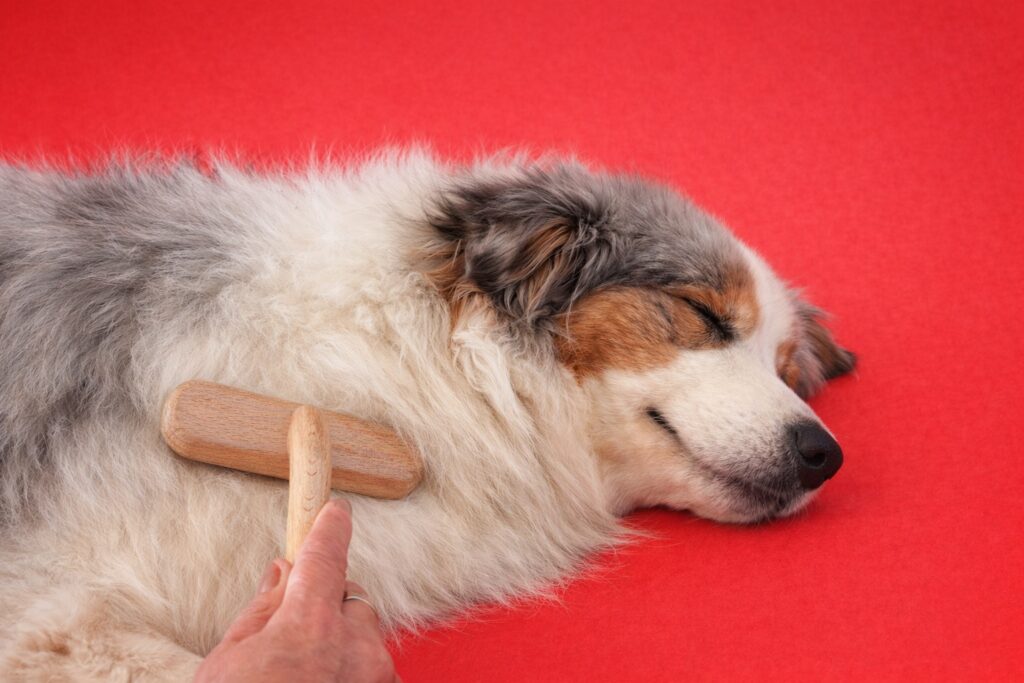
If you are wondering how to get your dog used to being brushed, the good news is that most dogs can learn to tolerate, and even enjoy, grooming with the right approach.
Searches for “how to get my dog used to brushing,” “why does my dog hate being brushed,” and “best brush for double-coated dogs” are some of the most common dog grooming questions online.
Regular brushing prevents matting, reduces shedding, supports coat health, and keeps dogs comfortable. For guardians, it is an essential part of responsible dog care. Yet for many households, grooming can still feel like a complete nightmare for both dog and human.
Why Some Dogs Hate Being Brushed
The good news is that most dogs can learn to tolerate — and even enjoy — being brushed when grooming is introduced gradually and in a calm, positive manner.
Seven, my former show dog, hated being brushed no matter what I did. I thought his dislike was related to his show days until Paige Turner showed up. She loved our brushing sessions and would lean into the brush as if it were the highlight of her day. Watching her relax during grooming gradually changed Seven’s mind. Over time, he stopped resisting and began settling beside us as I brushed both of them.
Most brushing problems occur because:
-
- The brush causes scratches or pulls
-
- Mats hurt when pulled
-
- The dog was never gradually introduced to grooming
-
- Sessions feel rushed or stressful
If brushing causes even one painful experience, your dog might remember it and avoid brushing in the future. Fortunately, patience and the right approach can change that.
How to Get a Dog Used to Being Brushed
Teaching a dog to accept brushing requires patience, positive reinforcement, and short training sessions. The goal is to create positive feelings about grooming so your dog remains calm rather than defensive.
Step-by-Step: Teaching Your Dog to Accept Brushing
Step 1: Start Without the Brush
Before introducing any grooming tool, begin with simple handling. Gently stroke your dog following the direction of coat growth and watch their body language. Look for signs of relaxation:
-
- Leaning into your hand
-
- Soft eyes
-
- Relaxed breathing
Reward calm behavior with praise or a small treat. The goal is to build positive associations with touch before introducing the brush. If your dog stiffens or turns away, slow down or stop and try again later.
Step 2: Introduce the Brush Gradually Hold the brush without using it. Let your dog sniff it and reward calm curiosity. Next, gently touch the brush to your dog’s shoulder for one second, then lift it off and reward again. Repeat this in short sessions. This gradual desensitization method helps stop fear and teaches your dog that brushing is safe.
Proper Brushing Technique: Line Brushing
Brushing should never hurt your dog. Even the best brush will not help if the technique is wrong. For medium-to-long coats, especially double-coated dogs, professional groomers recommend line brushing:
-
- Lift a small section of fur
-
- Brush gently from the skin outward
-
- Work through the coat in layers
-
- Never tear through mats
If you hit a tangle:
-
- Hold the fur near the base to minimize pulling
-
- Use short strokes
-
- Work slowly
A Quick Note for Therapy Dog Teams
If your dog participates in therapy visits at hospitals, schools, airports, or senior centers, grooming becomes even more important. Therapy dogs should arrive:
-
- Clean
-
- Fully brushed
-
- Free of loose undercoat
Loose shedding and floating undercoat are unsuitable in medical or educational settings. Another important guideline is to avoid fragrance. Many individuals are sensitive to scented products. In therapy dog visits, a clean, natural coat is the standard. After years of visiting hospitals and schools with my certified dogs, I’ve learned that simple and scent-free is always best.
Chris Christensen Original Series T-Brush: The Brush That Made Grooming Easier for Us
The Chris Christensen brush is the same one I use for my Australian Shepherds, Seven and Paige Turner. The tool you choose can make a significant difference. A poorly designed brush can pull, scratch, and make grooming harder for both you and your dog. After trying many grooming brushes over the years, I finally found one that works beautifully for double coats.
Why This Brush Works So Well
The Chris Christensen T-Brush features a unique T-shaped design with a vertical handle and a horizontal pin head. The pins are located on the underside of the head, which offers excellent leverage and reduces wrist strain.
Benefits include:
-
- Reduces wrist fatigue
-
- Smooth pins that glide through thick coats
-
- Effectively removes loose undercoat
-
- Durable beechwood construction
Because the pins glide smoothly, my dogs stay relaxed instead of pulling away.
Ideal Breeds for This Brush
This grooming brush works particularly well for:
-
- Australian Shepherds
-
- Golden Retrievers
-
- Border Collies
-
- Shelties
-
- Doodles
-
- Dogs that shed heavily during seasonal coat changes
Turning Grooming Into a Bonding Ritual
To help your dog relax during brushing:
-
- Brush your dog after exercise when they are calmer
-
- Keep training sessions under five minutes
-
- Maintain a slow, steady pace
-
- Reward relaxed behavior
Dogs mirror our emotional state. When grooming feels calm and predictable, many dogs begin to relax. Seven often closes his eyes when I brush him now. Paige Turner rolls onto her back and offers her tummy. That’s when you know brushing has become something your dog enjoys rather than something they endure.
If you enjoyed this story, I share more heartwarming, real-life moments with dogs on my Substack: thoughtful, dog-centered stories that celebrate the bond we build, one moment at a time. 
(Our site may contain links to affiliate websites, and we receive an affiliate commission for any purchases made by you on the affiliate website using such links.)