
“The greatness of a nation can be judged by the way its animals are treated.”
— Mahatma Gandhi
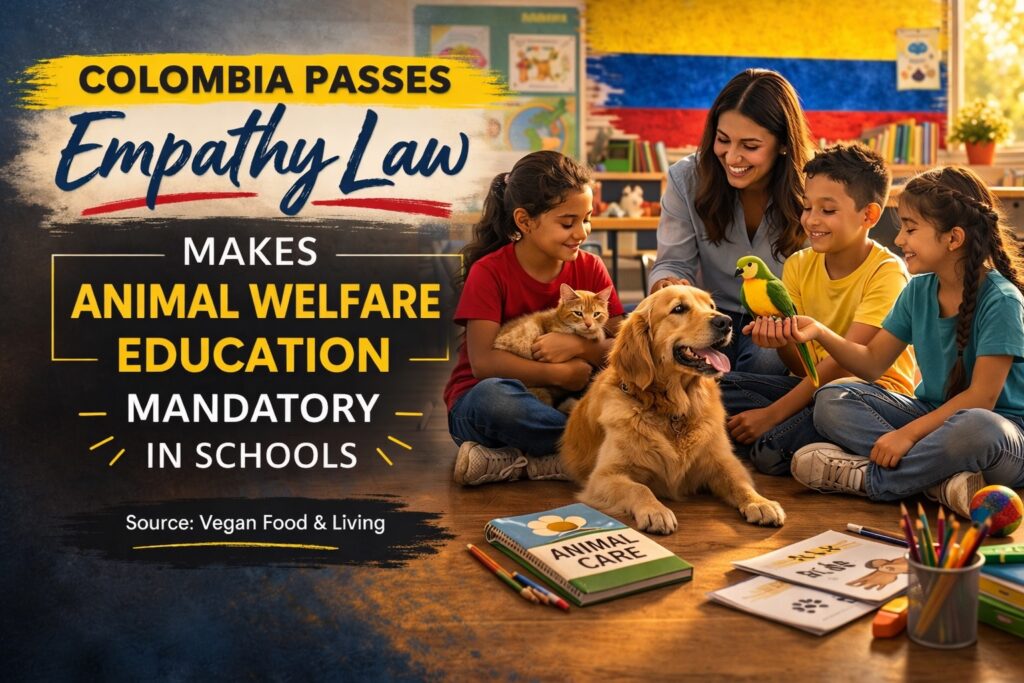
Animal welfare is front and center in Columbia. The country recently passed the Empathy Law, a landmark national policy that requires animal welfare and protection education in all public and private schools nationwide. The law integrates lessons on the ethical treatment of animals, biodiversity, and responsible guardianship into existing educational programs, making empathy toward animals a formal part of Colombia’s national curriculum.
Rather than treating compassion as an abstract ideal, Colombia has embedded animal welfare education into how children learn to understand the world around them.
This is more than a curriculum update. It is a cultural shift embedded in education policy.
What Colombia’s Empathy Law Requires Schools to Teach
Under the new law, animal protection education is integrated into environmental, civic, and ethical education programs across grade levels. Students learn the following:
• Ethical treatment of animals
• Responsible guardianship and care
• Protection from cruelty and neglect
• Biodiversity conservation
• Recognition of animals as sentient beings
By placing animal welfare education inside core learning frameworks, Colombia is signaling that empathy is not optional or extracurricular, it’s foundational.
The Colombia Empathy Law positions compassion as a civic responsibility, not merely a personal value.
Learning That Extends Beyond the Classroom
One of the most meaningful and direct animal welfare aspects of Colombia’s Empathy Law is its emphasis on lived experience. Students may now fulfill their required social service hours with animal shelters, protection organizations, and conservation groups.
This bridges the gap between knowing and doing; between theory and responsibility. The law also supports the development of a national network of educators trained in animal welfare education, ensuring teachers are equipped to deliver these lessons thoughtfully and consistently.
Teaching empathy in schools becomes both academic and practical.
A Broader Global Movement Toward Animal Protection Education
Colombia’s decision is part of a broader international shift.
In France, schools have introduced structured pet care education programs that teach children how to care for animals responsibly as part of early learning. The model focuses on practical daily skills such as feeding, safety, respect, and accountability — grounded in the belief that caring for animals builds emotional intelligence.
When considered together, these two approaches represent complementary frameworks:
• France emphasizes hands-on pet care and responsibility.
• Colombia emphasizes ethical treatment, empathy, and biodiversity at the national level.
Different structures. Same belief.
These are not symbolic gestures. They are policy decisions grounded in behavioral science, educational theory, and lived experience. How children learn to treat animals shapes how they learn to treat people, communities, and the natural world.
Why Animal Welfare Education in Schools Matters
Research consistently shows that early empathy education supports emotional regulation, social responsibility, and long-term well-being.
When children learn that animals experience fear, comfort, stress, and safety, they become better able to recognize those same experiences in others.
Animal protection education serves as preventive education. Cruelty does not begin in adulthood, nor does compassion. By teaching empathy before behavioral patterns harden, education becomes proactive rather than corrective.
Colombia’s Empathy Law recognizes that cultivating ethical awareness in childhood shapes how future generations approach conflict, environmental stewardship, and civic life.
Key Takeaways from Colombia’s Empathy Law
• Animal welfare education is now mandatory in all Colombian schools.
• Lessons cover ethical treatment, biodiversity, and responsible guardianship.
• Students may fulfill service hours with shelters and conservation groups.
• The law recognizes animals as sentient beings.
• Teaching empathy early may shape long-term social behavior.
A Precedent Worth Watching
Although this legislation applies to Colombia, its implications extend globally. As nations confront environmental crises, social divisions, and rising violence, education systems are being asked a deeper question:
What kind of citizens are we raising?
Colombia’s answer is clear: Empathy belongs in the curriculum.
As more countries explore integrating animal welfare education into schools, this model may become a blueprint for shaping not only academic knowledge but also ethical responsibility toward all living beings.
Developing Compassion Is Strategic
Teaching children to care for animals, ecosystems, and one another is neither sentimental nor merely strategic. It is preventive. It is deeply human.
By infusing education with compassion, Colombia is investing in a future where empathy is learned early, practiced regularly, and carried forward.
That lesson has the potential to ripple far beyond any classroom.
What do you think? Should the United States follow Colombia’s lead and make animal welfare education part of the national curriculum? I believe the answer is yes. Share your thoughts in the comments. If this resonates, please share this article so more people can join the conversation.
MORE PAWS ON THE GO POSTS . . .